By Melissa Culross
When is a subway more than just a subway? More than its tracks, tunnels and platforms? More than simply a way to get from point A to point B?
A subway is much more when people put their hearts and souls into building it, as so many who worked on the recently opened Central Subway did. The subway was decades in the making, and over the years, hundreds of SFMTA employees spent countless hours designing and constructing it. Every single contribution, no matter how large or small, was essential, and there are so many unsung heroes of the Central Subway whose collective legacy will be felt well into the future.
We want to introduce you to a few of those heroes, but please know that they are not the only ones.
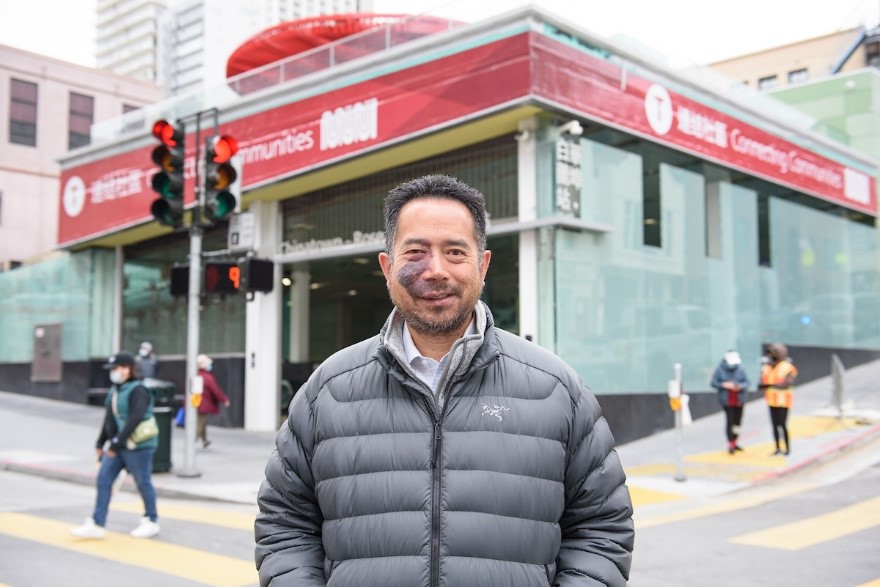
Wyman Lee
For Wyman Lee, building the Chinatown-Rose Pak Central Subway station was deeply personal. Lee, the SFMTA’s resident engineer for the construction, was born and raised just steps away from where the station now stands.
Lee first joined the SFMTA in 2000 and left a few years later to do construction management work for the San Francisco Public Utilities Commission. He returned to the agency in May 2013 to work on the Chinatown station. “This was a once in a lifetime experience for me,” Lee explained. “There aren’t many engineering careers that take you back to the neighborhood where you were born and [let you] provide a service for that community. It’s full circle.”
Lee believes the station and Central Subway will improve the lives of Chinatown residents now and for generations to come. That is particularly important to him because Lee’s family didn’t have much when he was growing up, and neighbors were always willing to lend a hand. “This has been my way of saying ‘thank you’ to a community that supported me when I was young,” he said.
Lee doesn’t need or want recognition; he just wanted to give back to Chinatown.
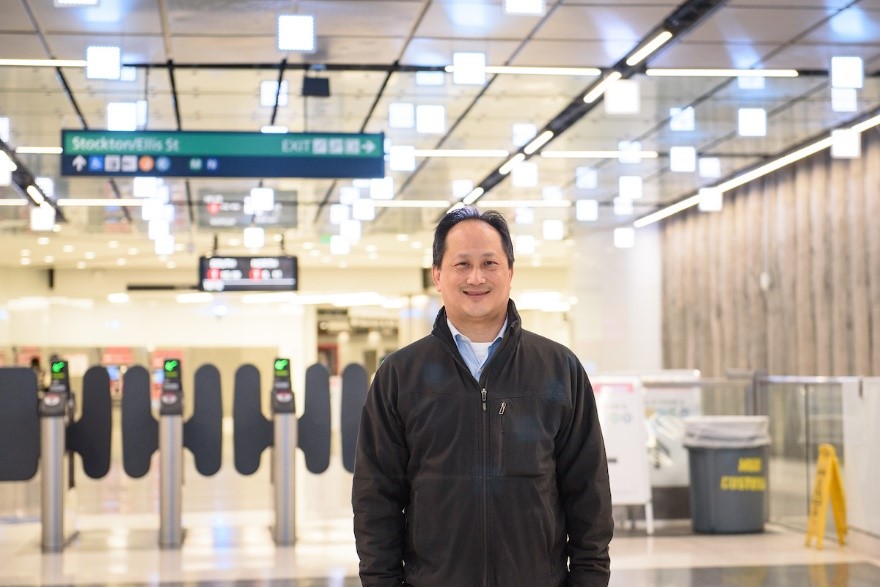
Albert Hoe
Albert Hoe has been with the SFMTA for 29 years, and his work on the Central Subway began in 2004. Hoe initially was a project engineer for the subway before taking on numerous other roles. “I think of this project as my first child,” he said. “I have three daughters [now], but before my kids, this was my life.”
Hoe grew up in San Francisco’s Richmond district, and after riding Muni all over town as a kid, he felt he could make a significant contribution to the city and its transit system with his work on the Central Subway. However, bringing the subway to life wasn’t always easy, and there were many stops and starts that occasionally made it feel, in Hoe’s words, like the project was on life support. “We had some really trying times where we had to go convince people this was a legitimate project that was worth the cost.”
Now that the Central Subway is open, Hoe feels relief more than any other emotion, including personal pride. This is, in part, because he doesn’t consider himself to be any more important than anyone else who contributed to the project – regardless of how long they were involved or what role they played. “I don’t ever feel like this was my job,” he said. “It’s our job.”
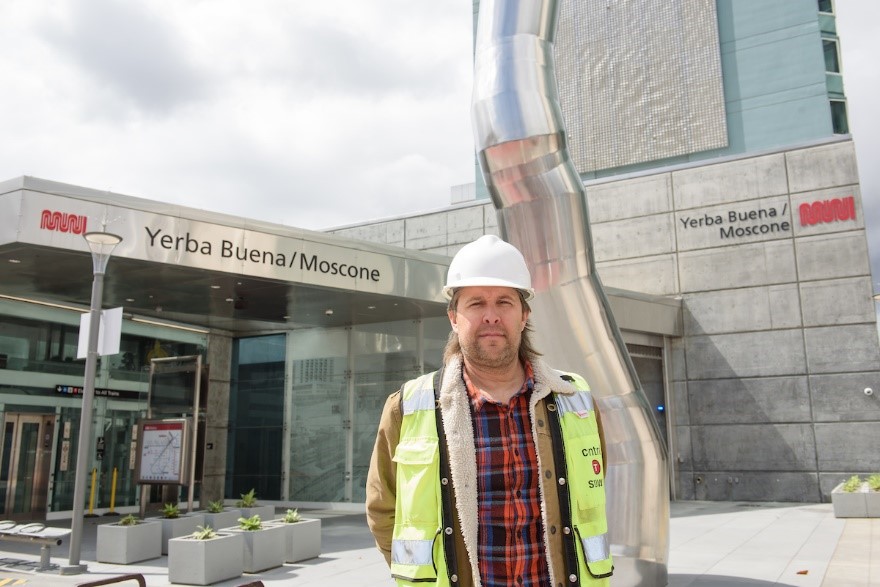
Paul Orsburn
Little did Paul Orsburn know, as he was studying civil engineering at the University of Kentucky in the 1990s, what the future had in store for him. “Never in my wildest dreams did I think I would be working on building a new subway line through the heart of San Francisco,” Orsburn said.
Once he had earned both his bachelor’s and master’s degrees from UK, Orsburn moved to California and worked in San Diego, Oakland and for the San Francisco Public Utilities Commission. He joined the SFMTA specifically to work on the Central Subway project in 2013 and was the resident engineer for construction of the Yerba Buena-Moscone station until 2020 when he transferred to the Union Square-Market Street station. He became the SFMTA’s Deputy Director of Construction Management in early 2023.
Orsburn is tremendously proud to have built something that will serve millions of people, and he would like to go back to the place that gave him the foundation for his career, the University of Kentucky, to talk to engineering students about his experience. His personal life also changed a bit during the Central Subway construction. “My daughter was born right as I started the project,” Orsburn said. “And now to be able to take her to the subway and show her what I worked on is really a nice feeling.”
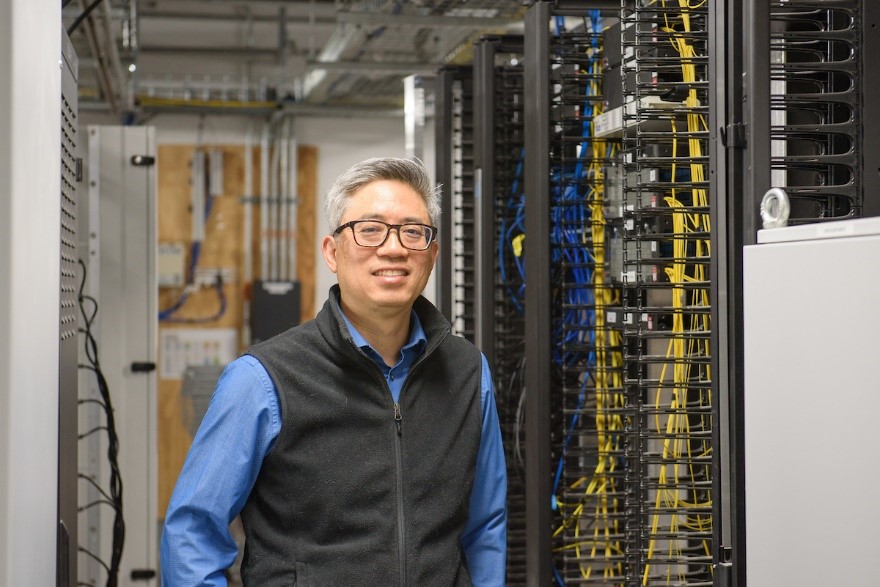
Sanford Pong
Sanford Pong has spent almost three-quarters of his SFMTA career so far working on the Central Subway. The electrical engineer came to the agency in 2000 after doing consulting work for five years, and he joined the Central Subway project in 2004.
Pong grew up in the Outer Richmond neighborhood of San Francisco and, as a teenager, would take Muni to school and to Chinatown. His years spent riding the 15, 30 and 45 bus lines through Chinatown were a perfect illustration of how valuable an artery like the Central Subway would be. On top of that, now that the subway is open, Pong can encourage his family in the East Bay to use it to get to Chinatown and Warriors games. “I tell them, ‘This is why we built it!’” he said.
Pong played different roles throughout the project, and he is particularly proud of having led the buildout of the subway’s fiber optic backbone network. This facilitates communication between the Central Subway and pre-existing SFMTA systems, including train control, radio, the data network and emergency phone lines, to name a few. What also stands out for Pong is how the Central Subway brought the staff together over the years. “A project like this takes a village to come together and get to the end,” he said. So many SFMTA staffers have been willing to help, and like Albert Ho, Pong believes that every contribution is important, no matter how large or small.
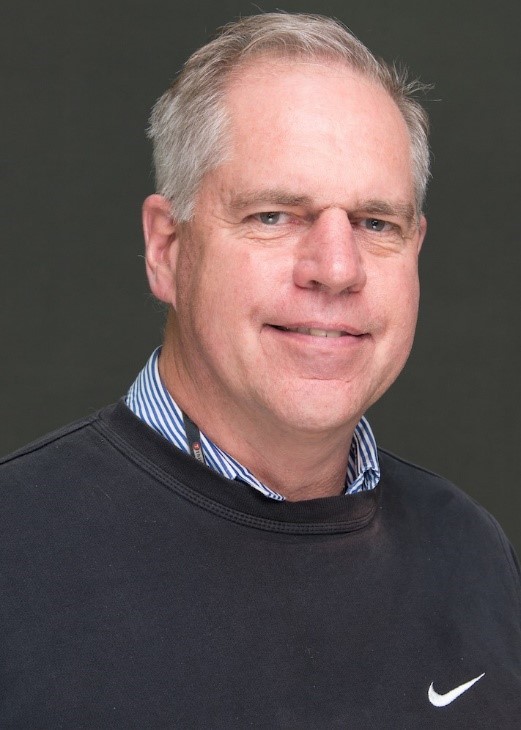
Terry Fahey
Civil Engineer Terry Fahey has 45 years of construction experience and began working at the SFMTA in 1999. In 2011, he became Deputy Director of Maintenance of Way, an agency division responsible for maintaining the rail trackway, train signals, traction power system, overhead lines and automatic train control system. His involvement in the Central Subway project began while he was serving in that role.
Fahey accepted a special assignment as Rail Activation Manager of the project in 2019 and was involved in testing, preparing maintenance staff, training coordination and approving all aspects of the subway. “My objective was to ensure that the Transit Division and other stakeholders got the highest quality, [most] reliable system possible,” he said.
However, Fahey feels that his work is not done. Now that the subway is open, Fahey is focused on the finishing touches that he says will bring the project to true completion. “[The opening was] a great accomplishment,” he said. “We have a system that is functioning and running very well, but there is still work left to do.”
Whether that work means figuring out how to keep hard-to-reach areas of the new stations clean or acquiring equipment to replace lighting, Terry Fahey will make sure the project crosses the final finish line.
You can learn more about the Central Subway by visiting Central Subway Project (SFMTA.com/Central).
Published May 16, 2023 at 02:33AM
https://ift.tt/Qq7WP60
Nhận xét
Đăng nhận xét